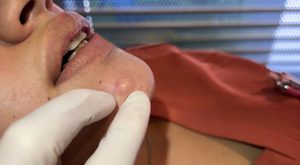
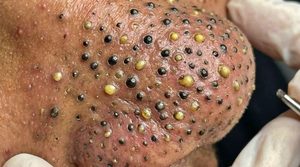
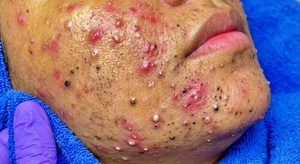
Blackheads are one of the most common skin concerns, and also one of the most misunderstood. The small dark dots on the nose, chin and forehead are not dirt, and scrubbing harder will not make them disappear. They form when a pore fills with oil and dead skin cells and the top of that plug stays open to the air.
The good news is that blackheads respond well to a calm, consistent routine. This guide explains what they are, which ingredients actually help, and what to avoid so you do not trade a few dark dots for irritated skin.
Quick answer: how to get rid of blackheads
- Use a leave-on salicylic acid (BHA) product 3 to 7 times a week to clear oil from inside the pore.
- Add a retinoid such as adapalene 0.1% at night, a few nights a week at first.
- Cleanse gently twice a day and moisturize, because dry irritated skin makes pores look worse.
- Skip pore strips, harsh scrubs and squeezing at home. They give short-lived results and can damage skin.
- Expect to wait 8 to 12 weeks before judging results.
What causes blackheads?
Blackheads are a type of open comedone. Each pore contains a hair follicle and an oil gland. When oil (sebum) and dead skin cells build up, they form a plug. If the pore stays open, the plug is exposed to air and darkens through oxidation. That is why the surface looks black or dark brown, not because dirt is trapped inside.
Genetics, hormones, oily skin and thick, occlusive products can all increase the chance of clogged pores. Blackheads often cluster in the “T-zone” because that area has the most active oil glands.
The ingredients that actually work
Salicylic acid (BHA)
Salicylic acid is oil-soluble, so it can travel into the pore and loosen the plug from within. Look for 0.5% to 2% in a toner, serum or leave-on gel. Start every other day and increase slowly. A full guide is in our article on salicylic acid for acne.
Retinoids
Adapalene 0.1% is now available without a prescription in many countries. It speeds up skin cell turnover, which stops pores from clogging in the first place. It is the most effective long-term option for blackheads, but it can cause dryness at first. Our beginner guide to retinoids covers how to start safely.
Azelaic acid
Azelaic acid at 10% to 15% (available in some countries without a prescription) helps with clogged pores and also fades the marks that acne leaves behind. It is usually well tolerated, which makes it a good choice for sensitive skin.
Clay masks
A kaolin or bentonite mask once a week can temporarily absorb surface oil and make pores look cleaner. Think of it as a bonus, not a treatment on its own.
A simple weekly plan
- Morning: gentle cleanser, light moisturizer, broad-spectrum sunscreen.
- Evening: gentle cleanser, then salicylic acid on alternate nights or adapalene on non-BHA nights, followed by moisturizer.
- Once a week: optional clay mask on the nose and chin only.
Do not use a BHA and a retinoid on the same night until your skin is used to both. If you want a full routine built around these steps, see our skin care routine for acne-prone skin.
What to avoid
- Pore strips: they lift the top of some blackheads, but the plug usually refills within days, and they can irritate skin.
- Harsh scrubs: crushed shells and gritty scrubs create tiny tears and do not reach the plug deep in the pore.
- Squeezing with fingernails: this can push debris deeper and leave marks or scars.
- Heavy oils and thick creams on blackhead-prone areas. Choose products labelled “non-comedogenic”.
If you are curious how professionals handle stubborn blackheads, you can watch a controlled extraction video. Professional extraction is done with sterile tools on prepared skin, which is very different from squeezing at home, and it is not a replacement for a good routine.
Does professional extraction help?
A licensed esthetician or dermatologist can remove blackheads safely with sterile tools, often after a gentle exfoliating treatment. This can give a clean start, but blackheads return if the underlying oil and cell buildup is not managed. Most people do best with a treatment every few months plus a home routine.
How long does it take?
Blackheads form slowly and clear slowly. Most people see a difference in 4 weeks and a clear improvement by 8 to 12 weeks. If you keep changing products every week, you never give any of them a fair chance.
Frequently asked questions
Are blackheads caused by dirt?
No. The dark color comes from oxidized oil and skin cells. Washing more often will not remove them and can dry out your skin.
Can blackheads go away on their own?
Some clear naturally as skin renews, but most keep coming back unless you use an ingredient such as salicylic acid or a retinoid.
Do pore strips work?
They remove the top of some blackheads for a short time. They do not prevent new ones, and they can irritate sensitive skin.
Why do I always get blackheads on my nose?
The nose has large, active oil glands, so it clogs more easily than other areas. Regular BHA use usually helps most there.
Is it safe to extract blackheads at home?
It is best to leave extraction to a professional. If you do see a stubborn blackhead, treat it with a leave-on BHA rather than squeezing.
When to see a dermatologist
See a dermatologist if blackheads do not improve after 12 weeks of consistent treatment, if you also have painful or deep bumps, or if your skin becomes very red, sore or scarred. This article is for general information and does not replace personal medical advice.