If your skin is prone to breakouts, a good routine is the most powerful tool you have. But the internet makes it look complicated, with ten-step plans and dozens of products. The truth is that a short, steady routine beats a long, changing one.
This guide gives you a simple morning and evening plan, explains the order to apply products, and shows how to add active ingredients without irritating your skin.
Quick answer: the basic acne-prone routine
- Morning: gentle cleanser, treatment (optional), light moisturizer, broad-spectrum SPF 30 or higher.
- Evening: cleanser, treatment (retinoid or benzoyl peroxide), moisturizer.
- Introduce only one new active at a time and wait two weeks before adding another.
- Give any new routine 8 to 12 weeks before deciding whether it works.
Step 1: Cleanse gently
Wash twice a day, once in the morning and once at night, and after heavy sweating. Use lukewarm water and a mild, fragrance-free cleanser. Foaming gel cleansers suit oily skin, while creamy ones suit skin that feels tight. Avoid hot water, rough washcloths and scrubbing. Over-cleansing strips the skin barrier and can actually trigger more oil and irritation.
Step 2: Treat
This is where acne-fighting ingredients come in. Choose based on what your skin is doing:
- Blackheads and clogged pores: salicylic acid or adapalene. See salicylic acid for acne.
- Red, inflamed pimples: benzoyl peroxide 2.5% to 5%. See benzoyl peroxide for acne.
- Persistent breakouts and prevention: adapalene 0.1% at night. See retinoids for acne.
- Oiliness and uneven tone: niacinamide. See niacinamide for oily skin.
A simple, effective pairing for many people is benzoyl peroxide in the morning and adapalene at night. Begin with every other day, and increase when your skin tolerates it.
Step 3: Moisturize
Acne-prone skin needs moisture, especially when using treatments that dry. Pick a lightweight, oil-free, non-comedogenic gel or lotion. Ingredients such as glycerin, hyaluronic acid and ceramides support the skin barrier without feeling heavy. If you feel tightness or flaking, moisturize more, not less.
Step 4: Protect with sunscreen
Sunscreen is the most overlooked step. Many acne treatments make skin more sun-sensitive, and sun exposure darkens acne marks. Use a broad-spectrum SPF 30 or higher every morning. Look for light fluid or gel formulas. Our guide to sunscreen for acne-prone skin explains how to choose one.
Sample routine
Morning
- Rinse or cleanse with a gentle cleanser
- Niacinamide serum or benzoyl peroxide (optional)
- Oil-free moisturizer
- Sunscreen, SPF 30+
Evening
- Remove sunscreen and cleanse
- Adapalene (start two or three nights a week)
- Moisturizer
Once or twice a week
A gentle exfoliant on the nights you are not using a retinoid. See how to exfoliate your face safely.
Common mistakes
- Using too many actives at once. This causes redness, peeling and a damaged barrier.
- Changing products weekly. You cannot judge a product in less than 6 to 8 weeks.
- Skipping moisturizer. Oily skin still needs water and barrier support.
- Picking at spots. It delays healing and creates marks.
- Ignoring the hairline and jaw. Apply treatments to the full area prone to breakouts, not just individual spots.
How to patch test
Before using a new product on your whole face, apply a small amount to the side of your neck or behind the ear for two or three days. If you notice burning, swelling or a rash, do not use it. Mild tingling at the start of acids and retinoids is normal, but pain is not.
What results to expect
In the first 2 to 4 weeks you may see little change, and some people notice more breakouts as the skin adjusts. By week 8 to 12, you should see fewer new spots and smoother skin. Keep going after the skin clears, because acne tends to return when treatment stops.
Adjusting the routine for your skin type
Oily skin
Choose a gel cleanser, a niacinamide serum and a gel moisturizer. Do not skip moisturizer, because dehydrated oily skin often produces even more oil.
Dry or sensitive skin
Use a creamy cleanser, start retinoids only once or twice a week, and prefer lower-strength benzoyl peroxide (2.5%) or azelaic acid. Add a ceramide moisturizer to strengthen the barrier.
Combination skin
Apply treatments only where needed. For example, use salicylic acid on the nose and chin, and a richer moisturizer on dry cheeks.
Adjusting the routine for the seasons
Cold, dry air and indoor heating can make acne treatments harsher in winter, so you may need a thicker moisturizer and fewer active nights. In summer, sweat and humidity can clog pores, so lighter textures and a post-workout cleanse help. Sunscreen is needed all year round.
A note on patience and tracking
Skin renews itself roughly every four weeks, so any change in your routine takes at least a month to show. Write down the date you start each product. If a new breakout appears two days after starting something new, it is probably coincidence, but a pattern that repeats over two or three weeks is worth noticing.
Related video
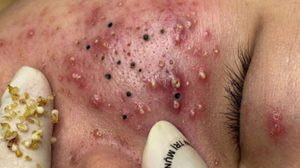
Once your routine is in place, you can see what a careful, professional-style extraction looks like in this video. It is a good reminder of how much preparation real extraction needs.
Frequently asked questions
Do I need a toner?
No. A toner is optional. If you use one, pick an alcohol-free formula.
How many products should I use?
Three to four is enough: cleanser, a treatment, moisturizer and sunscreen.
Can I use all active ingredients together?
It is not recommended. Combine slowly, and separate strong actives onto different nights.
Should I stop my routine if my skin gets worse at first?
A mild adjustment period is common with retinoids. If there is burning, swelling or severe peeling, pause and speak to a professional.
When to see a dermatologist
If you have followed a consistent routine for 12 weeks without improvement, or you have deep, painful or scarring acne, see a dermatologist. Prescription options can be much more effective. This article is general information, not personal medical advice.